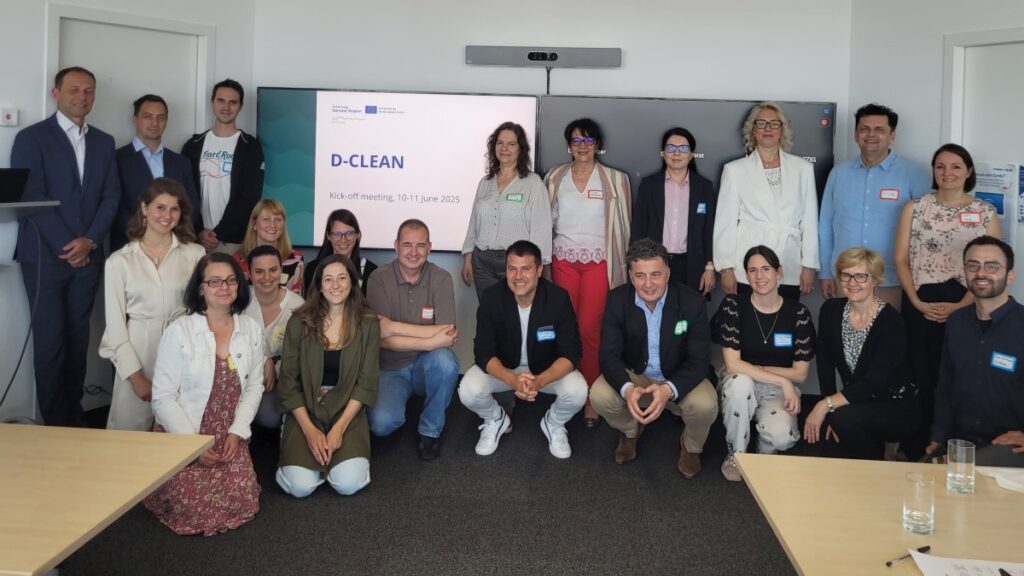
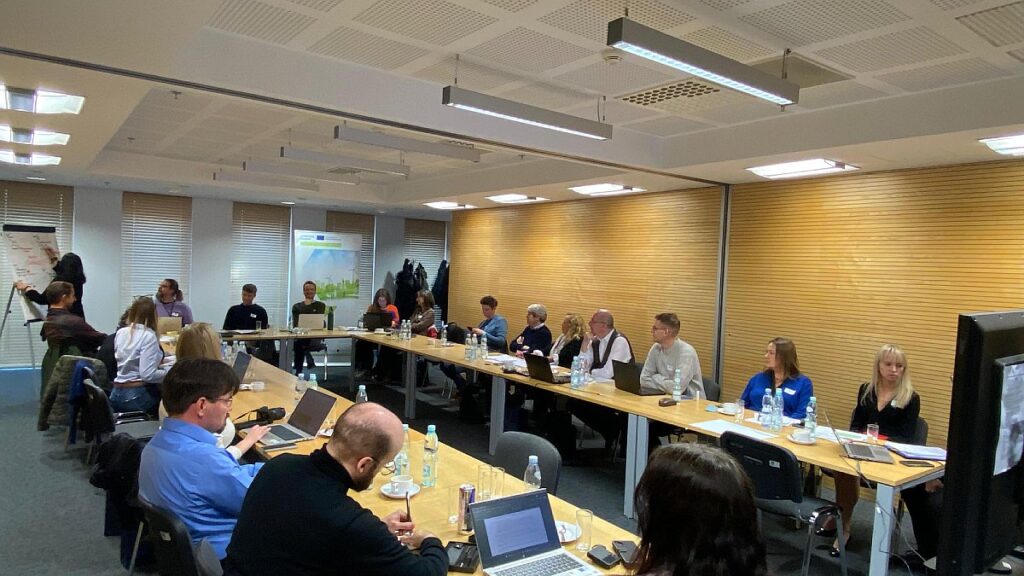
REC4EU partners gathered in Lublin at the VI project meeting. The first stop was an interesting study visit to the Central Station in Lublin, which integrates trains, regional and intercity buses, city public transport and suburban/minibus lines in one hub.
It is one of the most environmentally friendly public buildings in Poland, thanks to numerous innovative solutions:
- use of geothermal heat pumps supported by rooftop photovoltaic panels (solar energy);
- glass facade with a “building within a building” design to minimize energy loss;
- rainwater recovery/reuse systems for irrigation and sanitary use;
- anti-smog paving materials in the surrounding areas, green walls and extensive planting (trees, shrubs, climbers) to improve air quality and aesthetics, with a green roof terrace open to users.
Not only a functional transport hub, but also an urban and architectural landmark that has won awards and accolades, such as the Green Building Awards (Poland), as well as being shortlisted at international architectural and infrastructure competitions.
After the visit, the partners moved to the offices of the Lublin Voivodeship, which hosted the meeting. The session was dedicated to the improvement of policies, with a focus on discussion and exchange of experiences related to the improvement of local policies. The activity was structured around a series of questions:
- What is the change? (achieved or proposed)?
- What additional value is expected for your territory?
- Which policy has been or will be improved?
- Who did you learn from within REC4EU?
- What is your timeframe for promotion?
- Were there any obstacles during the promotion process? If so, which one and when?
- How will you monitor the effects of the improvements? Will you use existing indicators or design new ones?
- Who are the main stakeholders who cooperated with you in REC4EU?
- How did you hire them?
- Which stakeholders have proven most useful and why?
The discussion allowed partners to share progress and insights on how their policies are evolving, with particular attention to those that face challenges and therefore require the development of an alternative Action Plan, which would be developed in the event that the initially envisaged policy improvement is not achieved by the end of the 6th semester.
The meeting continued with an update on the communication activities, coordinated by ARRR as the communication manager, and then focused on the pilot actions of the project.
The second day began with a study visit to Pustelnia, in Opole Lublinska, about half an hour from Lublin.
There is a 400-hectare pond on the site, dedicated to the cultivation and sale of fish (trout and carp), as well as the on-site restaurant business. To increase management efficiency and competitiveness, the farm has invested in renewable energy sources by installing photovoltaic systems that produce electricity for self-consumption, mainly to supply electricity for internal purposes: Specifically, the farm has a 30 kWp power supply system on the fish farming facilities and a 35 kWp power supply system on the sales building.
In the afternoon, the meeting continued with the analysis of project indicators. The discussion focused on the methodology for monitoring improvements achieved through policy improvement. Each partner explained in detail which and how many types of indicators they plan to use and undertook to identify new ones before the next meeting, scheduled for May in Serbia.
Afterwards, the partners attended an interesting exchange of views between local stakeholders, who represented the Renewable Energy Community Cluster (REC) and the regional administration (regulatory office). The discussion highlighted one important critical issue: the need to improve the exchange of expertise between the political and technical/administrative spheres. Indeed, in Poland, EU regulations on renewable energy communities have not yet been adopted, which significantly complicates their creation and development.
Thanks to the REC4EU project, a local strategy is currently being developed to include the concept of RECs in the national political agenda, enabling their growth across the country.
Special thanks to the host partner, the Lublin Voivodeship, for the perfect organization of these events in Lublin.
Watch the recording of the most relevant moments of these two days.
The project “Renewable Energy Communities for EU regions” (REC4EU) is funded under the Interreg Europe program 2021-2027.